
Burnout Prevention: Being Human in the Age of AI
written by
Melissa Andrada, MSc (Mel - they/them)
CEO & Cofounder
Roshen Sethna (she/her)
Chief Strategy Officer
with contributions from
Dr. Bree McDaniel, Psy.D. (she/her) & Dr. Suzan Ahmed, Ph.D. (she/her)
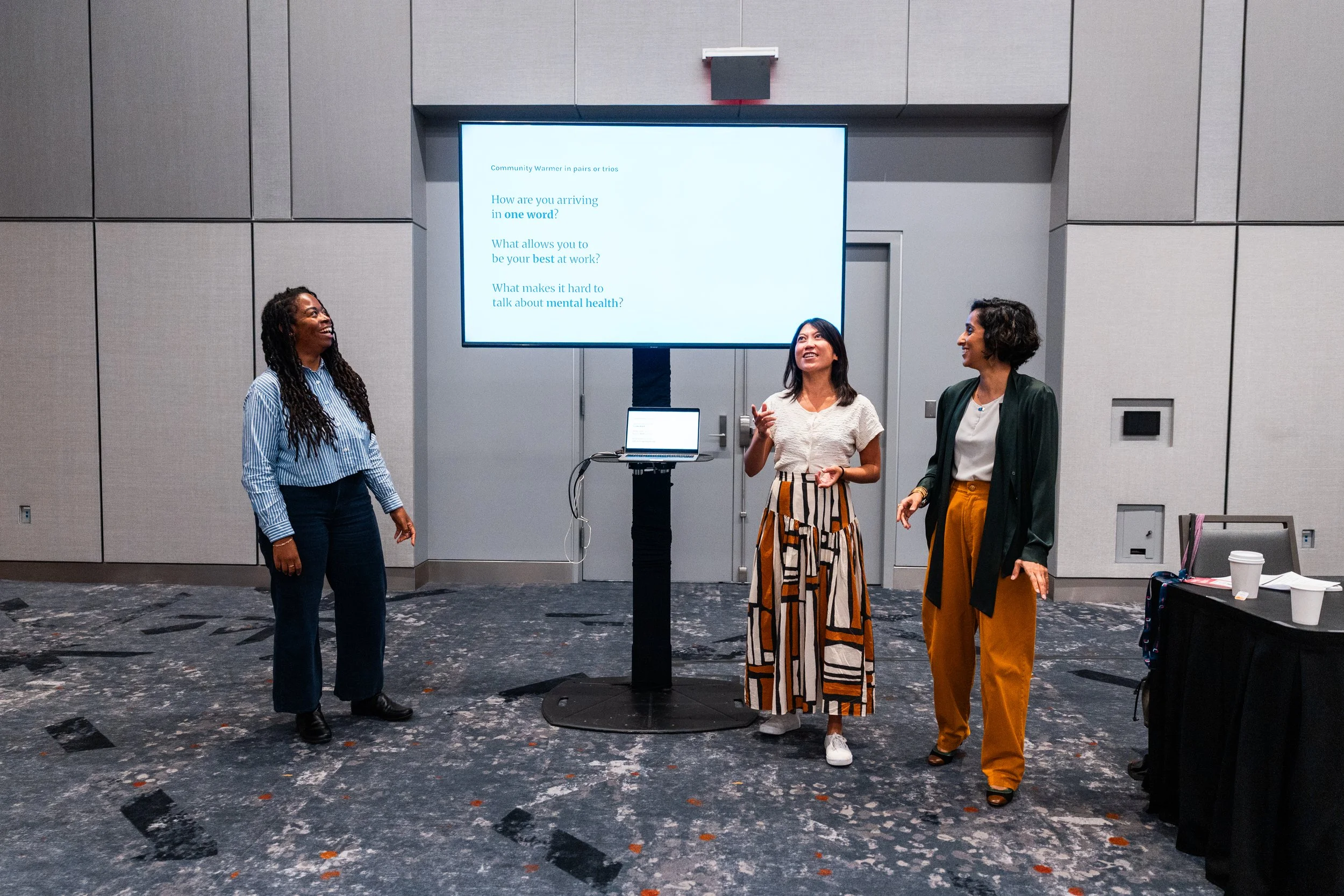
Our Fairground Collective supporting engineers in their mental health at LeadDev’s LDX3 Conference in New York City
Photo by AOTV
-
Dear engineer,
It's ok to not be ok.
It's ok to feel.We are with you.
With care,
Fairground
You deserve to feel safe and supported.
Engineering is one of the most stressful job classifications, with high potential for burnout and one of the highest workplace suicide rates.
Burnout prevention is suicide prevention. We're here to compassionately shine a light on the most tender and difficult issues of life and work so our colleagues and communities can get access to the mental health and healing support they need to not just stay alive -- but thrive and innovate for humanity.
Why this matters
76% of employees report experiencing
burnout at least sometimes
2020 Gallup
57% of U.S. workers experiencing emotional exhaustion and mental disengagement from work
2023 American Psychological Association
More than 720,000 people die due to suicide every year. Suicide is the third leading cause of death among 15–29-year-olds.
2026 World Health Organization
Amidst layoffs and economic and political uncertainty, if you’re feeling exhausted and overwhelmed, you are not alone. With the speed and automation of AI, it can be easy to forget we are human – with real bodies, with real needs. Welcome to being in a body, not just a brain.
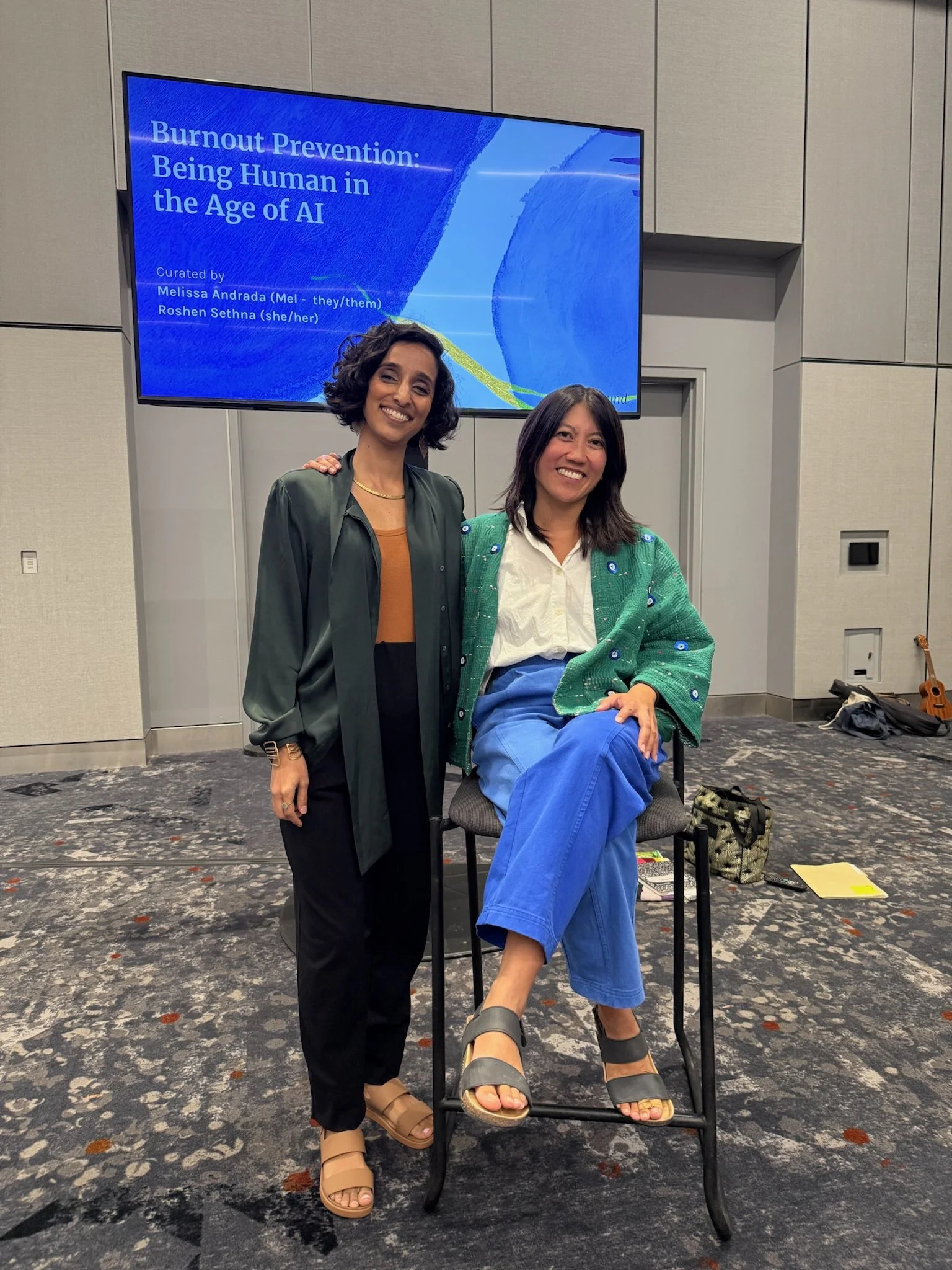
Chief Strategy Officer Roshen Sethna (she/her) & CEO Melissa Andrada (mel - they/them) presenting at LeadDev LDX3 Conference in New York City
From Mel: As a former Chief Operations Officer of a VC-backed startup in London, I learned this lesson the hard way. Historically, I saw my body as a means to carry my brain around. After a series of injuries and chronic pain in 2018, which made typing on my computer and even a leisurely walk across the park a difficult journey, I learned the hard way you can’t separate body from mind. It inspired me to evolve my career to somatic leadership coaching, yoga teaching and expressive arts therapy supporting leaders, organizations and communities in their wholeness and wellbeing.
Amidst the turn to ChatGPT and Claude for therapeutic support, we invite you to connect back to the inner knowing in your own body. Our work at Fairground centers embodied leadership and the Autonomic Nervous System, the original ‘operating system’ that powers high impact teams and work.
We invite you to co-create change for collective wellbeing and resilience. Come as you are.
“The health of our nervous system is perhaps the most important determinant of our mental and physical well-being.
87% of our nervous system activity is below the iceberg and surface of our thoughts.”
This theory of change for developing a culture of collective wellbeing and burnout prevention is based on our collective’s combined 30+ years of experience supporting thousands of individuals and organizations across corporate, civic and clinical settings in their mental health and wellbeing.
1. SHARED DEFINITIONS
What is Burnout?

Image made by Prevention to describe Burnout Symptoms
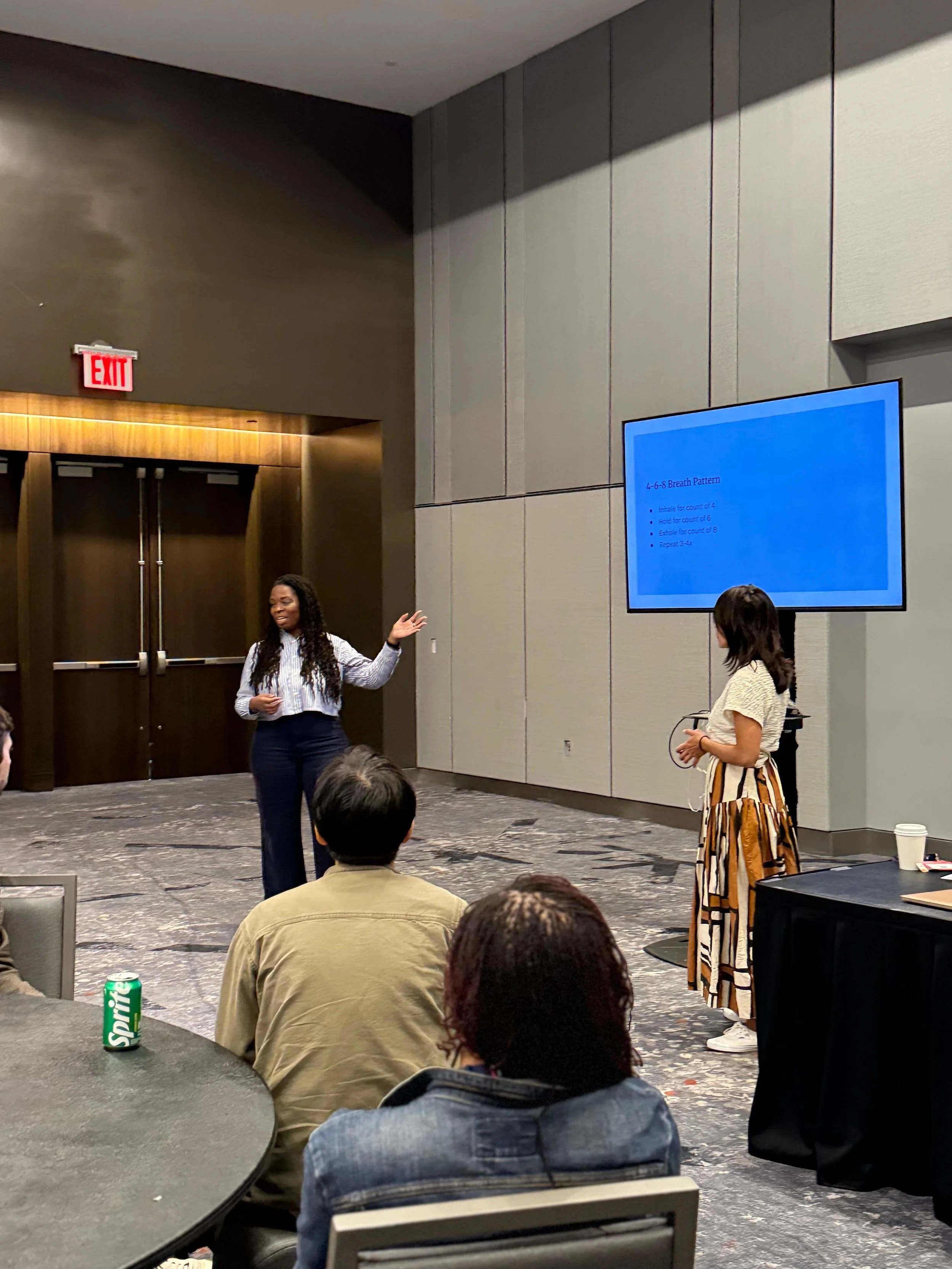
Principal Psychologist Dr. McDaniel presenting on somatic strategies to prevent burnout
The National Library of Medicine defines it as: “Burnout is a state of emotional exhaustion, physical fatigue and cognitive weariness caused by long-term uncontrolled and unresolved work stressors.”
Signs of Burnout
How do you know if you’re burnt out? Are you experiencing these symptoms?
Fatigue
Apathy and dissatisfaction
Irritability and anger
Sleep troubles
Changes in eating habits
Tension headaches
Other physical symptoms
(i.e., pain and GI issues)
Source: Cleveland Clinic 2026 (Thank you to our colleague Dr. Bree McDaniel for finding this research)
Let’s take three deep breaths together if you see yourself in these signs and symptoms.
Maybe you’re feeling overwhelmed by the speed of change, the pressure of deadlines and difficult managers. Maybe you’re worried about losing your job, keeping up with the speed of change or being placed by AI. Maybe you’re feeling irritable and exhausted as you haven’t been sleeping well or taking time for yourself.
You’re not alone. We’re with you.
2. THE NERVOUS SYSTEM
What is the Nervous System? What does this have to do with Burnout?
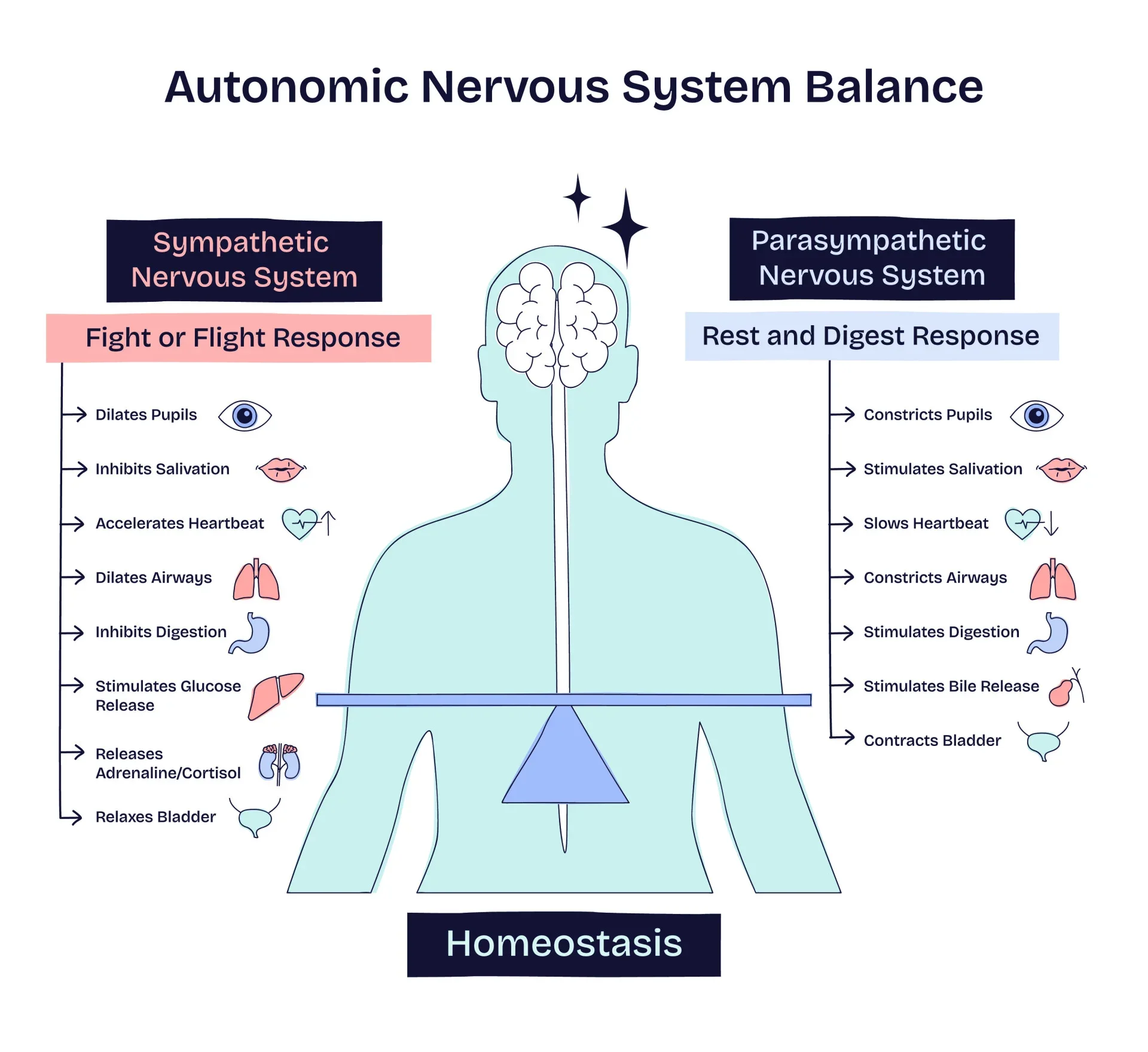
Image made by Simple Psychology to describe the differences between the sympathetic and parasympathetic nervous system
Burnout isn’t just in your brain; it lives in the body. Burnout is a nervous system that’s been in sympathetic overdrive for far too long.
Our autonomic nervous system consists of two main states:
Sympathetic nervous system, often referred to as ‘fight, flight or freeze’
Parasympathetic nervous system, often referred to as ‘rest and digest’
When the nervous system is in a prolonged state of sympathetic, it drains your energy, clarity and focus, your joy, creativity and resilience – leading to the incapacity to show up, let alone be your best, at work.
“The autonomic nervous system is at the heart of our lived experience. It influences the way we live, love, and work; it guides how we move through the world. The nervous system is the common denominator in our human family designed to help us successfully navigate the challenges of daily living ensuring we survive in moments of danger and thrive in times of safety”
Recent studies show odds of reporting moderate depression are 30% higher among people who used AI each day. Amidst layoffs, economic uncertainty and the speed of change in AI, it can feel impossible to keep up, ask for support and stay connected to the body.
In an era where we are increasingly turning to technology for answers and solutions, we call leaders to turn back to their bodies for wisdom. Listening to our nervous systems is the most efficient strategy for addressing burnout, as it gives us the most potent solutions for returning back to the prefrontal cortex, the site of our rational thinking and executive functioning.

Image made by Embark Recovery to explain impact of trauma on brain
The nervous system is a critical component for Psychological Safety. According to the heavily cited Google’s Re:Work Study based on 180 teams and 200+ interviews, Psychological Safety is the most important attribute of a high performing team. This study defines Psychological Safety as, “Teams feel safe to take risks and be vulnerable with each other.” Our work at Fairground bring a more contemporary embodied understanding of safety in the workplace, that goes beyond the frontal lobe and cognition.
Our Definition of Psychological Safety
Embodied Safety is the understanding and practice that each person can authentically be themselves and use their voice, transparently share ideas and feedback, fail and make mistakes, express feelings and difficult experiences, and honor workplace requests to effectively do their job and live a balanced personal life, without fear of being penalized or shamed.
Each person feels present and grounded in their body. Their nervous system is comfortable, confident and calm, which allows them to be more focused and impactful at work.
3. SELF REGULATION + NERVOUS SYSTEM
Self Regulation Practices: Returning to Your Body
As our colleague Dr. Suzan Ahmed shared in a recent article, “Because so much of our nervous system activity happens outside our conscious awareness, working with the body gives us a more direct path to managing stress responses that we may not even realize are present.
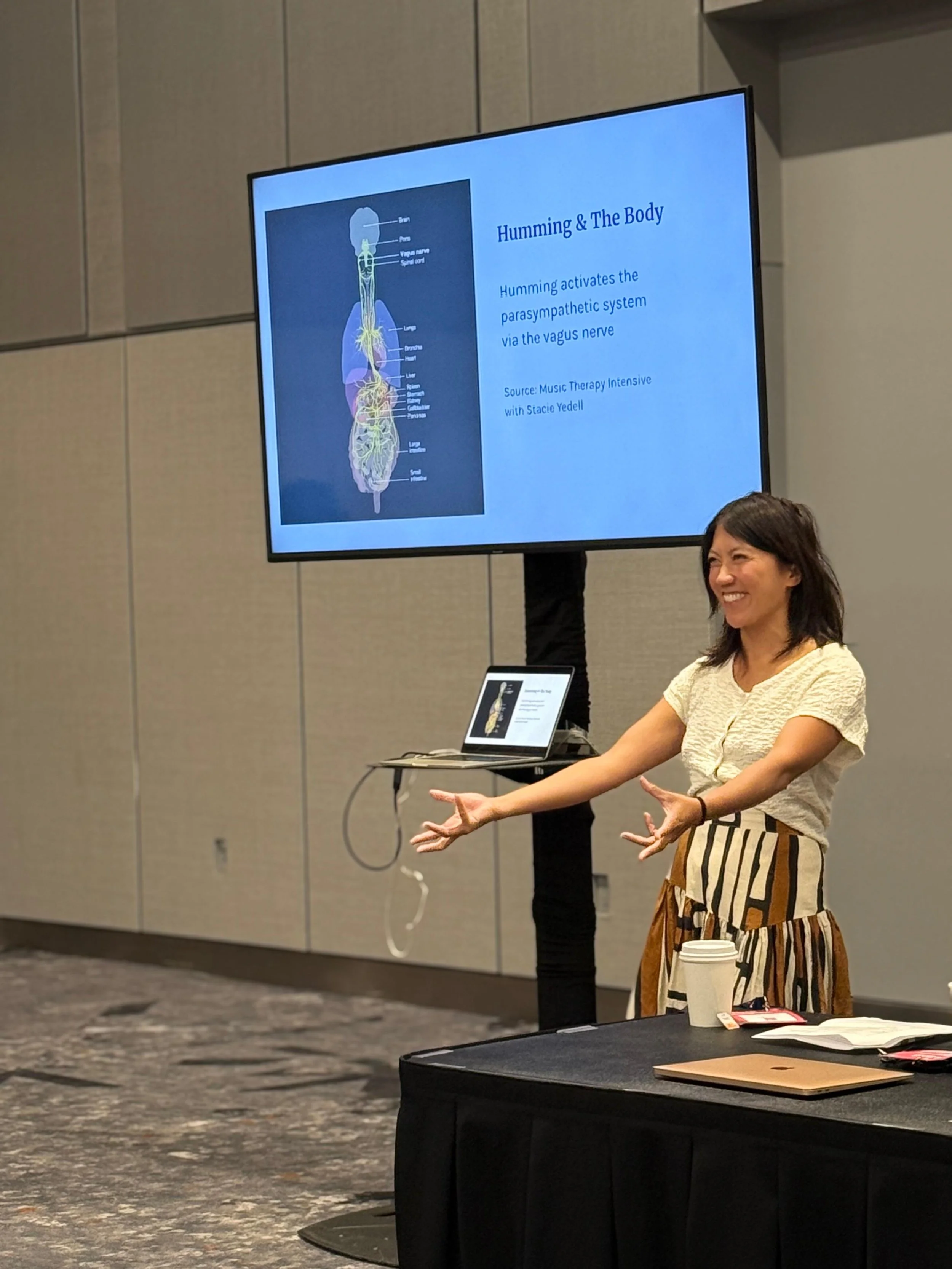
CEO Melissa Andrada (mel - they/them) describing the benefits of humming at LeadDev LDX3 Engineering Conference in New York City
The #1 job of the autonomic nervous system is to make you feel safe; it often bears no attention to goals, deadlines and the Gregorian calendar. To quote and paraphrase Dr. Ahmed, “Our bodies need to feel safe before our minds can fully engage with logic or language.
Fortunately, interventions to manage stress responses are often simple and include mindful awareness and intentional breathing. Examples of effective tools include:
• Slowing down the breath (especially longer exhales, it activates the parasympathetic nervous system)
• Taking intentional pauses and walks between meetings
• Stepping away from your phone, computer and constant stimulation
In a study by the Institute of Mindful Leadership, 70% of leaders reported that mindfulness improved their strategic thinking.” Each person, each nervous system is unique. Connecting to a daily self regulation practice – whether it is mindful walking, meditation, martial arts – can provide grounding and comfort amidst high-stress and high-pressure situations.”
PRACTICE /PAUSE AND REFLECT
Try on these somatic practices. Each person is unique and different, see what works for you.
-
This Embodied Practice can provide insight into what your nervous system needs in the present moment — and what breathwork practice might be most supportive.
Facilitate a body scan from the feet all the way to the crown of your head.
What are you noticing in the body?
How are you feeling?
What does the body need?
I might notice my shoulders are tightening, which signals I’m experiencing stress and should probably stretch and take a break.
-
This breathwork practice is helpful for deep relaxation and sleep
Inhale deeply through the nose for count of 4
Hold the breath for count of 6
Exhale out the mouth or nose deeply for count of 8
Repeat 3-4x
Notice: How do you feel?
-
This breathwork practice can support you in reducing stress while remaining awake and focused
• Inhale slowly through the nose for a count of 4
• Hold your breath for a count of 4
• Exhale out slowly through your mouth or nose for a count of 4
• Pause and hold empty for a count of 4 before inhaling
• Repeat: 3-5 rounds
Notice: How do you feel?
-
Humming activates the parasympathetic system
via the vagus nerveFind a comfortable seat, dropping your shoulders down, relaxing your jaw
Inhale deeply through the nose, exhale out the mouth or nose (repeat 1-3x)
Make a "Mmmm" sound in the back of your throat, lower pitches can feel more soothing to the nervous system
Notice: How do you feel?
We invite you to adapt these tools to your unique individual needs and context. These tools are more effective when they truly become a daily consistent practice. You won’t have the same efficacy and organizational impact if you only use them when you are in moments of distress or dysregulation at work. When you commit to practice, you have more capacity to rewire your conditioned automatic tendencies. You can more quickly re-center back into your parasympathetic nervous system to embody your most calm, creative and confident expression of leadership.

Photo by Spencer Ian Harris
It’s ok to ask for help.
If you feel overwhelmed, seek additional external support with a trusted and highly skilled psychotherapist, coach and/or somatic practitioner.
If you need resources for mental health support at work in the U.S., Mental Health America offers toolkits for employees and employers. The Center for Workplace Mental Health offers information about anxiety in the workplace.
If you or someone you know is struggling or in crisis, help is available. Call or text 988 or chat 988 lifeline.org. You can also visit the National Alliance on Mental Health (NAMI) website, or call 1-800-950-NAMI(6264). In an emergency, contact the National Suicide Prevention Lifeline at 1-800-273-TALK(8255) or go to the nearest emergency room.
4. CO-REGULATION & NERVOUS SYSTEM
Co-Regulation Practices: Building Connection Amidst Burnout
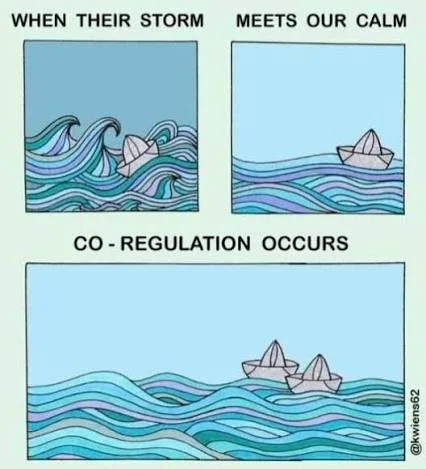
Image made by And Then We Had Kids to explain co-regulation
Why does it feel so good in the body when we feel seen and heard?
Co-Regulation is a shared practice where two or more people use their felt connection and nervous systems to help soothe stress, cue safety and manage big emotions.
Embodied Listening facilitates nervous system co-regulation. Our brains literally change when we feel seen and supported. Neurological mirroring occurs when interpersonal reactions are experienced as being nonjudgmental & respectful (Jones-Smith, 2020).
Embodied listening involves complete presence and listening with your entire body. To allow the person who is speaking to bring their entire self to the conversation.
“Holding space means to be with someone without judgment. To donate your ears and heart without wanting anything back. To practice empathy and compassion. To accept someone’s truth, no matter what they are. To allow and accept. Embrace with two hands instead of pointing with one finger. To come in neutral. Open. For them. Not you. Holding space means to put your needs and opinions aside and allow someone to just be.”
Common traps we fall into when listening:
Listening to respond
Comparing what the speaker is saying to other similar stories or to your own experiences
Trying to fix the speaker’s problems by offering advice or racing to solutions
Feeling distracted or diverting attention away from the speaker
Dismissing the speaker’s truth, even subtly
We have all experienced conversations where we can sense that we are not fully heard. Often this sensing comes through physical signals.
Communication consists of:
55% Nonverbal Cues
38% Vocal Quality
7% Words
“I do nothing alone. My whole life is a collaboration.”
We underestimate how much our embodied presence can impact someone else. Our brains transform when we feel fully seen and supported. Showing up vulnerably and being fully held is a practice that builds safety and trust over time.
You can practice embodied listening during 1:1s, stand ups, demos, and more. It can often feel hard to practice or overwhelming to be heard in this way since we are not always used to it. If this is true, try practicing in smaller time increments. Or, practice with a colleague who is equally eager to practice with you. Start with 1:1s and expand the practice to larger team meetings. Create space and time for reflection on how embodied listening felt compared to the status quo.
-
Taking a moment to pause and ground as a team.
Invite each colleague to share: How are you feeling in one word?
Ask each person to reflect: What does your body need? Invite your colleagues to stand, stretch, move, and/or drink water before diving into the meeting agenda.
Feeling connected to others is key for a joyful and calm nervous system. According to polyvagal therapist Deb Dana, “Co-regulation creates a physiological platform of safety that supports a psychological story of security that then leads to social engagement.” Ultimately, a collective psychological story of security is what leads to the highest impact teams.
5. Systems Regulation + Nervous System
Team & Organizational Regulation: The Collective Nervous System
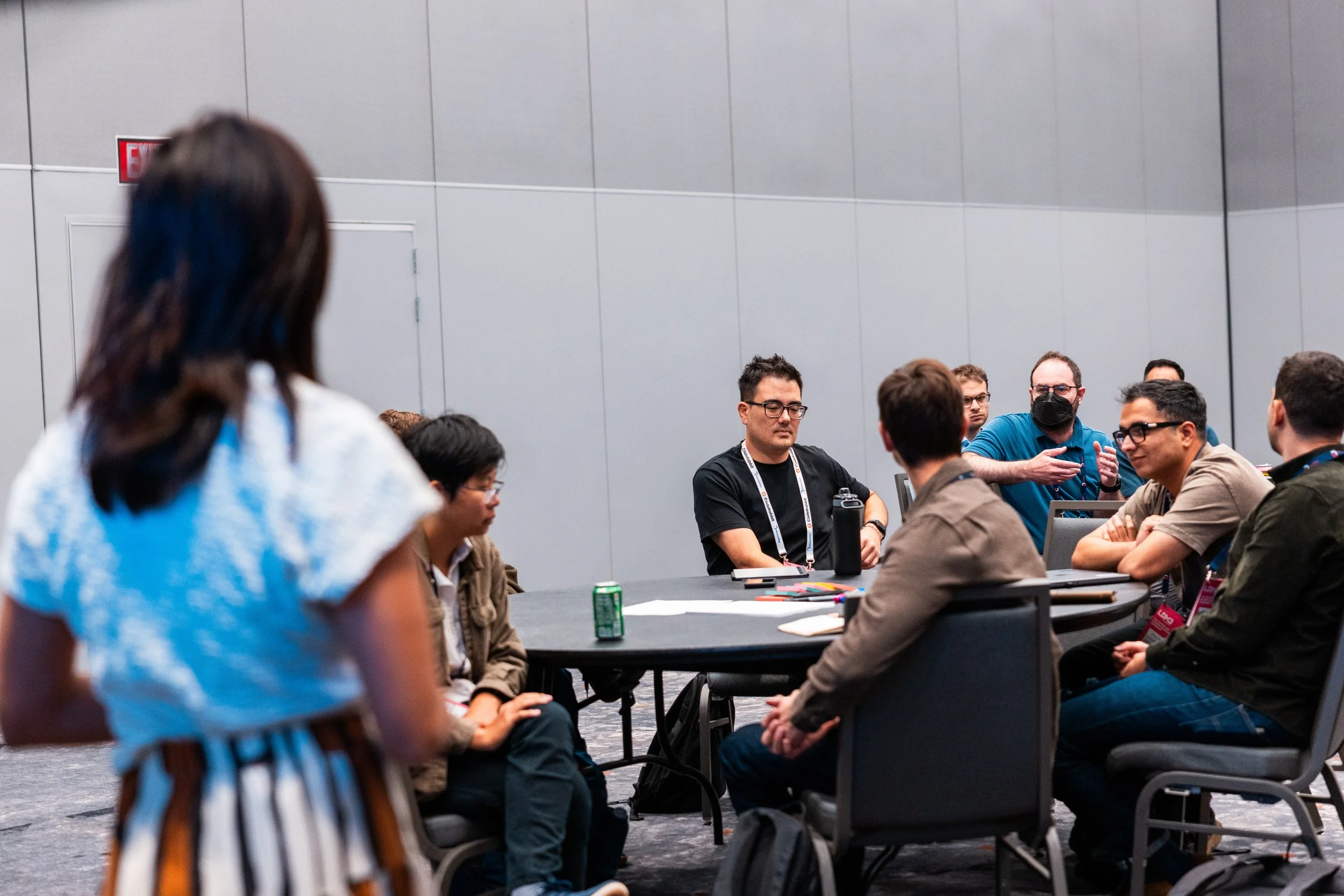
Photo by AOTV
Therapeutic and mental health practices in the West are often focused on the individual. We understand that the stress engineers are facing is reflective of a much broader and deeper systemic issue for all employees: a work culture that doesn’t always prioritize humanity. The hard truth: this is not always a system we can self and co-regulate out of.
We heard in our sessions at LeadDev LDX3 Conference in New York City that engineers are afraid to speak up on their opinions about AI for fear of losing their jobs. We heard that engineers are often told that they absolutely must be using AI at work. We heard managers are afraid to challenge senior leadership even when people know their teams are facing depression, anxiety and insomnia – and even supporting their teams where family members are at risk of suicide. We believe there’s a more hopeful future for AI.
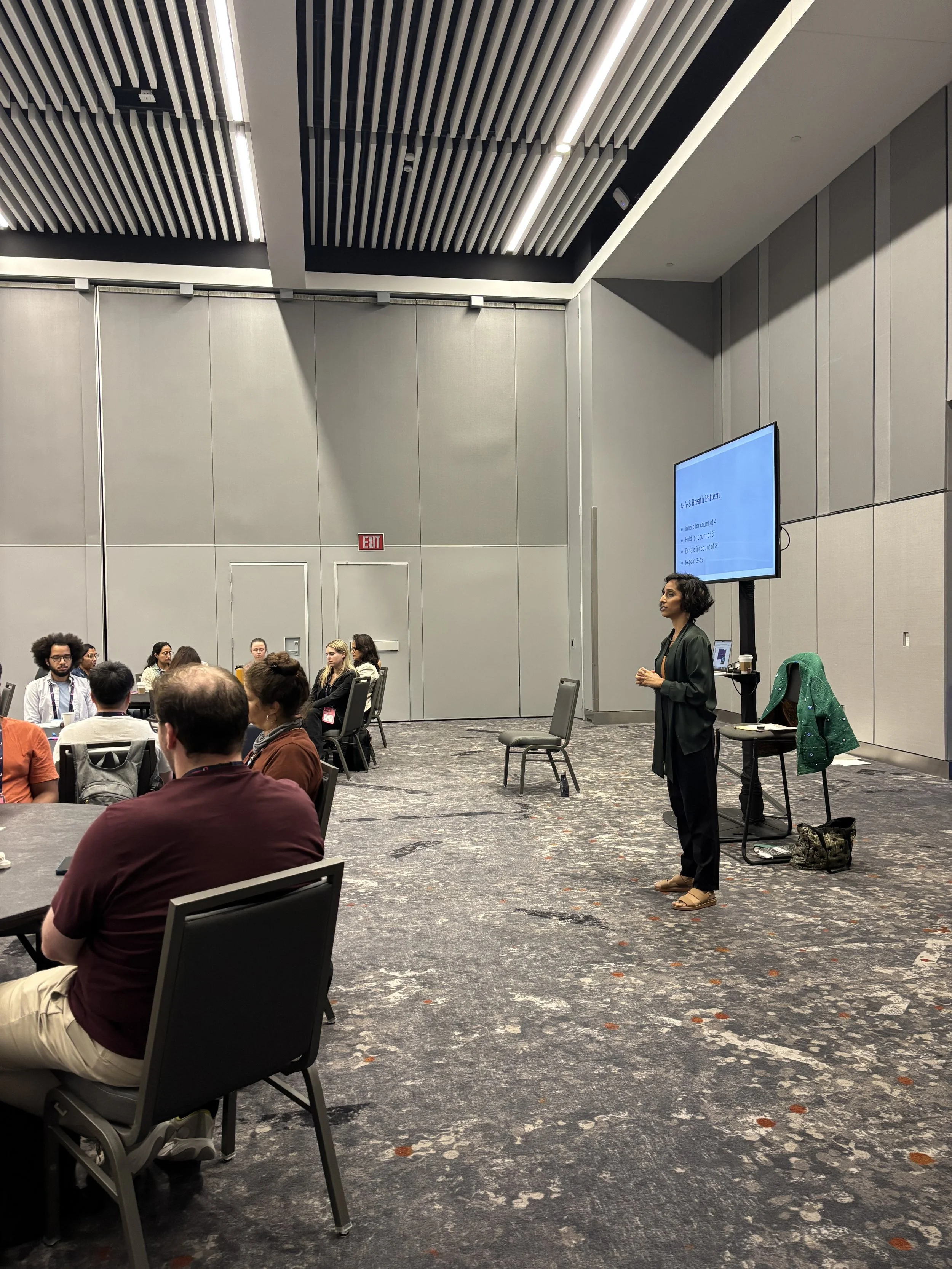
Chief Strategy Officer Roshen Sethna presenting on somatic strategies for change at LeadDev LDX3 Conference in New York City
We aspire to create cultures and communities where people feel safe. The skills and practices we teach at Fairground can support individuals and teams with managing grief, stress and burnout amidst high-pressure demands on the nervous system – both within and outside of work. We also honor that self regulation and co-regulation can only go so far without thinking about changes on a team, organization and societal level.
From Roshen: I think more and more about locus of control these days. I have been lucky: my leadership positions have allowed me a good bit of control over the culture and tone of the organizations I’ve been a part of. If you are in this position, you have a rare opportunity in the age of AI to create a culture that puts people first. That allows tough discourse and disagreement. That brings in real conversations about AI stress, harm, and worry. That prioritizes thoughtfulness and long term impact over short term gains.
We cannot shift our workplaces overnight. Work in the United States and globally is driven by capital and shareholder value. The AI race has further placed an immense burden on workers. We can, however, illuminate a more ethical and humanist path within our locus of control.
At Fairground we are interested in stories where organizations and teams are building for collective wellbeing and collective wealth. As a first step, this could be anything from building a culture that includes more honest discourse about AI to internally regulating AI use. In more advanced spaces, your team might be supporting and investing in the very real identity and role shifts that engineers are experiencing due to AI. At a grander scale, collective wellbeing can also be structural and visionary: organizations using co-op style leadership, decision making, and wealth distribution; organizations prioritizing an ethical future and advocating for AI regulation.
Creating little bubbles of spaces that are operating on priorities that deviate from the norm is a revolutionary act. Our job is to start and expand these spaces. If you’re wondering where to start, think about the next decision or conversation you are going to have and how you can prioritize collective wellbeing in that decision or conversation. Start with the collective wellbeing of your team and expand the concept to the collective wellbeing of humanity and the earth.
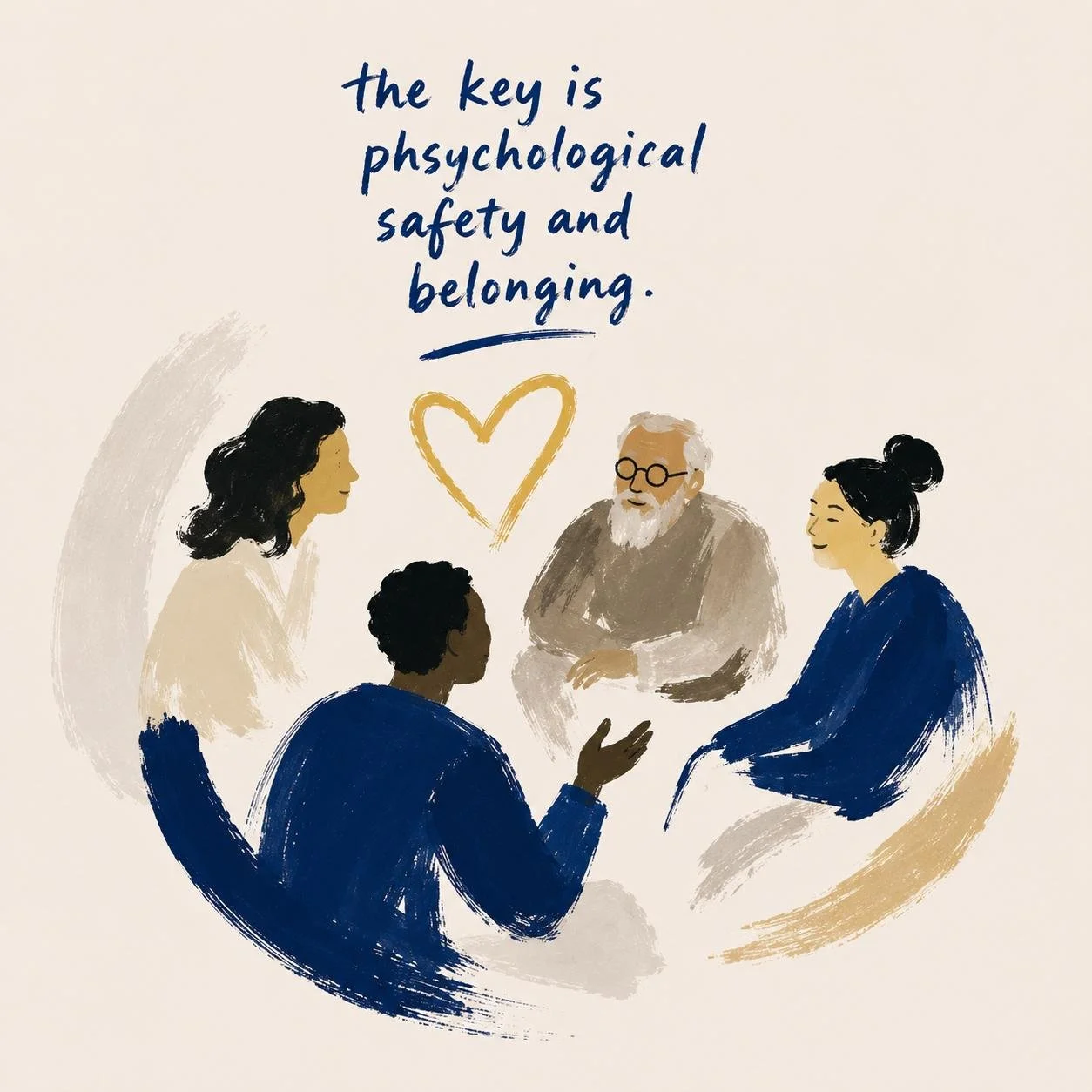
Photo made with ChatGPT, guided by Creative Director Christian Butte
Know that along this path of shifting priorities, we will all be faced with making sacrifices. These sacrifices could be anything from money to your reputation. We all have to decide what sacrifices we are able to make while still being able to put food on our tables.
If you have started creating a different way of operating in the age of AI that prioritizes ethics, collective wellbeing, and collective wealth, we’d love to hear from you.
We are here to walk the path of both compassion and courage with you. Purpose is our anchor.
9. CONCLUSION
Beyond AI and Burnout: Going Back to What Make Us Human
-
Dear Engineer,
We know things might be hard right now.
We’ve got you. We’re with you.
With care,
Fairground
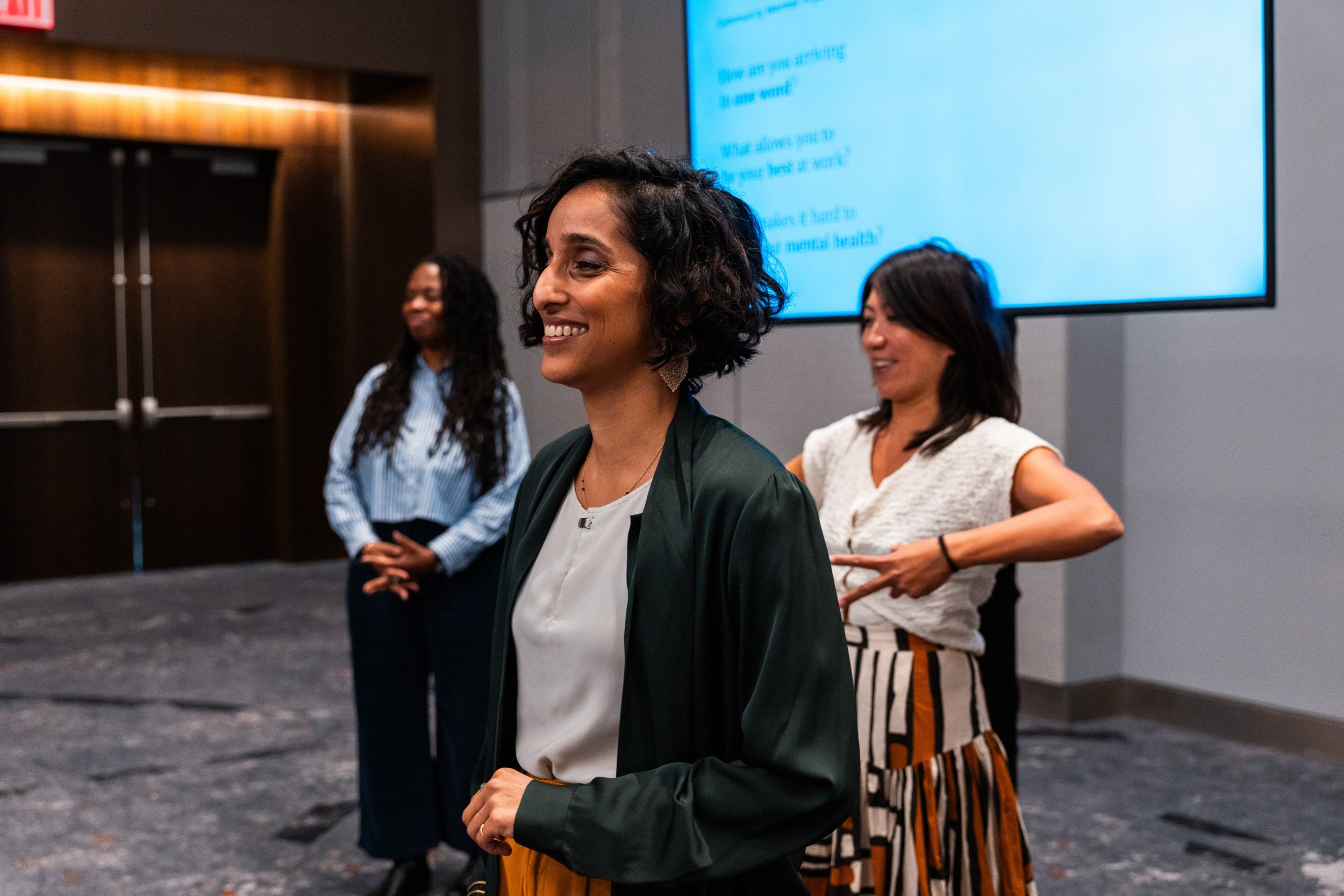
Photo by AOTV
We know teams with the presence of psychological safety have the highest impact. At Faiground, we aspire to create both organizations and communities where people feel safe and supported.
“I am a cell-sized unit of the human organism, and I have to use my life to leverage a shift in the system by how I am, as much as with the things I do. This means actually being in my life, and it means bringing my values into my daily decision making. Each day should be lived on purpose”
As we move towards a vision of collective wellbeing, we know the solution requires action as individuals and leaders, as teams and organizations, as the larger operating system of society. This goes beyond the practice and craft of engineering, impacting every member of our society.
Systems change can feel daunting. Part of what makes us human is imagination and integrity: the capacity to imagine possibilities beyond what exists in the present moment and the integrity to make thoughtful, ethical choices to build that beautiful future.
Imagination begins with a body. Our autonomic nervous systems are a reminder of our inherent wisdom on how to harmonize and get back to what makes us human.
We need all of us to co-create the solution. We invite you to co-regulate and courageously take action with us. Thank you for being human, and taking the time to read and reflect with us.
We’re here to support you if you’d like to partner with us in building a culture of collective wellbeing and resilience within your team, organization and community — or within your own personal life. We’d love to hear from you.